Word Roll
- 4.9
- Rating
- 1.00M
- Installs
- Free
- Price
 Analysis by App-foxy
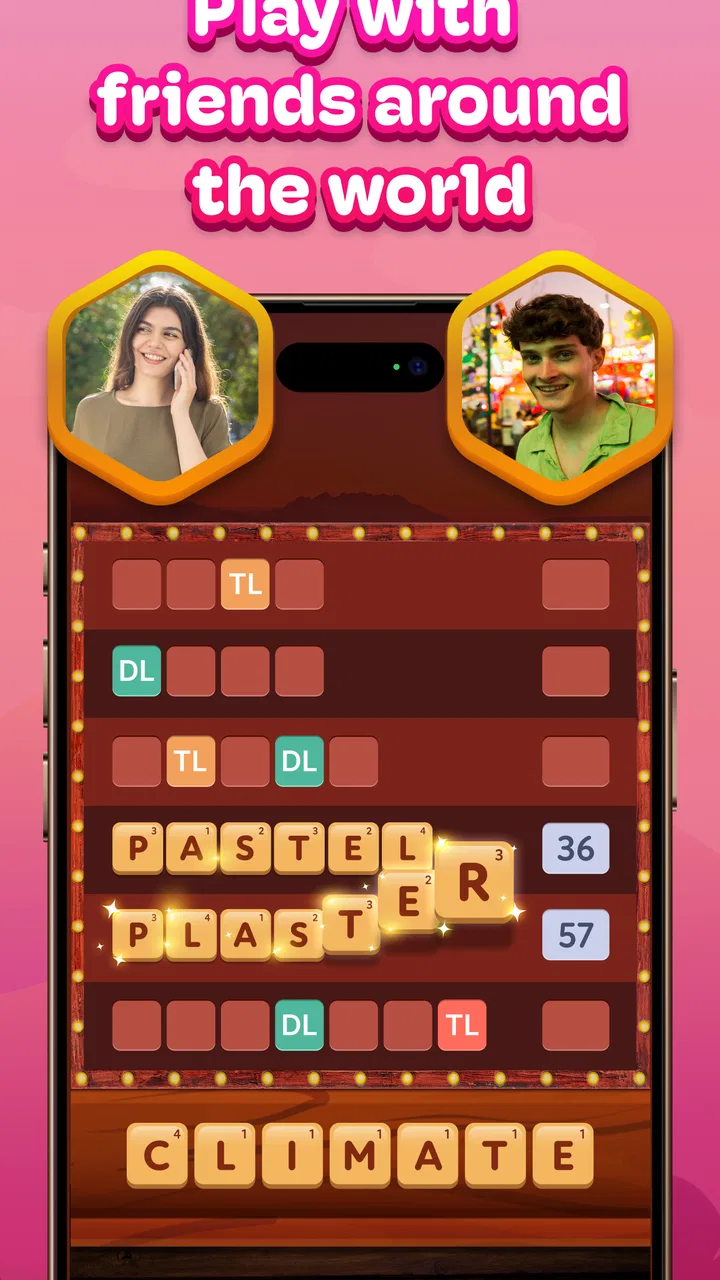
I spent time with Word Roll as a compact word game, and my first impression was that it is built for short bursts rather than long, uninterrupted sessions. The idea is easy to understand: you face a word challenge, look for the right answers, and keep moving through the game at your own pace. That simplicity makes it approachable, but it also means the experience depends heavily on whether you enjoy repeating a familiar puzzle rhythm.
Developed by PlaySimple Games, this free game is aimed at an Everyone audience and sits firmly in the casual word category. It has reached over a million installs, with a 4.9 average from around 72 thousand ratings and roughly 7.3 thousand written reviews. Those figures suggest that the basic format has found a strong audience, although popularity alone does not tell me whether it will suit your personal taste. For me, its appeal comes from being immediately playable without demanding a large time commitment.
How the word challenge feels in everyday use
The best way to understand the game is to imagine opening it during a small gap in the day. I can see myself playing while waiting for an appointment, taking a break from work, or winding down before bed. It does not require the same attention as a long strategy game, and I do not need to remember a complicated story or control system after putting it down. That makes it particularly comfortable for players who want a mental diversion rather than a major gaming session.
You May Also Like

 Blood Strike: 2.5 Anniversary
Blood Strike’s Loadouts Turn Every Drop Into a Tactical Gamble
A close look at Blood Strike’s custom loadouts: how fast access to signature weapons reshapes its battle royale rhythm, rewards preparation, and narrows the gap between fights.

 Pandora - Music & Podcasts
Pandora’s Music Is Easy to Start, but Harder to Recover
Pandora’s strength is its low-effort path from a seed to a station. Its weak spot is how much confidence it asks you to place in connection, setup, and quiet recovery.

 8 Ball Pool
 Is Built on Rivalries, Rematches, and Routine
A close look at the rivalries, rematches, shared routines, and unanswered safety questions that turn a quick pool match into a persistent mobile community.

 Samsung Music
’s Quiet Strength Is Playing What You Already Own
Its reach comes less from spectacle than from dependable access to a personal library. That simplicity is both the app’s strongest retention engine and its ceiling.

 AccuWeather: Weather Radar
AccuWeather Review: A Quick, Clear Forecast for Everyday Decisions
For everyday plans, the best forecast is the one you can understand quickly. AccuWeather makes rain timing, radar, and local conditions easy to act on, with a few trade-offs.

 Hill Climb Racing
Why Hill Climb Racing Still Turns Crashes Into One More Run
A tiny car, a bumpy hill and one more upgrade: Hill Climb Racing keeps resurfacing because its simple chaos makes every near-miss feel personal.
More From Our News Desk



Its central strength is the low barrier to entry. You do not need to be an expert in word games to begin, and the Everyone age rating reflects that accessible positioning. At the same time, accessible does not mean completely effortless. Word puzzles can become surprisingly stubborn when a familiar-looking arrangement refuses to produce the answer I expect. That tension between quick recognition and occasional hesitation is what gives the game more staying power than a simple vocabulary exercise.
I also like the fact that the game can fit different moods. When I have only a minute, I can treat it as a quick distraction. When I am more relaxed, I can spend longer thinking through a difficult challenge. That flexibility is important because a word game becomes frustrating if every session demands commitment. Here, the format feels better suited to dipping in and out, even though players who prefer deep, varied gameplay may eventually want more than this structure offers.
What the free download really means
The download is free, so the initial decision is straightforward: you can try the game without paying an entry fee. That matters in this category because word games are often difficult to judge from a short description. A free starting point lets you discover whether the puzzle style fits your vocabulary, patience, and preferred session length before spending anything.
There are in-app purchases ranging from $0.99 to $99.99 per item. I would therefore treat the free access as an opportunity to evaluate the game, not as a promise that every possible part of the experience will remain cost-free. The practical question is whether you are comfortable continuing with the free route and ignoring optional spending, or whether you are the kind of player who is likely to buy help or other purchasable advantages when progress slows.
That distinction is central to the game’s value. If you only want a few casual word challenges and are happy to play within the free experience, the price of entry is attractive. If you know that difficult puzzles make you reach for purchases, the potential cost deserves more attention. I would set a personal spending limit before starting, especially because a large top-end purchase can be disproportionate to the role of a small casual game in my daily routine.
I would not describe the purchase range as automatically good or bad. It depends on how you play. Someone who never spends can still judge the game on its free entertainment, while someone who regularly buys assistance should compare that ongoing habit with the value they receive. The important point is to separate free access from paid value: downloading at no cost does not by itself establish that every later purchase is worthwhile.
Where the game delivers real value
For me, the most useful benefit is mental engagement without a large setup cost. A word challenge gives a short break more substance than simply scrolling through a feed. I have to notice patterns, test possible answers, and decide whether I am overlooking an obvious solution. That makes a brief session feel active rather than passive.
It can also work well as a gentle routine. A player might open it with morning coffee, use it during a commute as a passenger, or play a little after finishing household tasks. The game does not need to replace a full hobby to be worthwhile. Its value can come from filling small spaces in the day with something focused and familiar.
Another strength is its broad audience. Because the presentation is built around words rather than complex controls, it can appeal to people who do not usually identify as gamers. It may also suit households where different ages want something understandable and low-pressure. I would still avoid assuming that every family member will enjoy it equally: word knowledge, patience, and tolerance for repeated puzzle patterns vary widely.
The game’s current version is 1.318, and it runs on operating systems beginning with version 10. That makes compatibility an important practical check before downloading. If your device meets that requirement, the game is positioned as an easy trial rather than a major technical commitment. I would still keep enough free storage and a stable connection for installation and updates, but I would not choose it for technical spectacle. Its value is in the puzzle activity itself.
Three ways I would use it more effectively
My first tip is to treat difficult rounds as a change-of-approach problem, not just a vocabulary problem. When I stare at the same arrangement for too long, I tend to repeat the same guesses. A better routine is to pause, read the available letters or clues in a different order, and deliberately look for shorter or less obvious possibilities. That small reset prevents frustration from turning into random tapping.
Second, I would use the game as a controlled break rather than an automatic habit. Setting a natural stopping point after a short session helps preserve the pleasant challenge. If I keep playing only because I am annoyed by an unresolved puzzle, the experience changes from relaxing to irritating. This is especially useful for anyone who is sensitive to games that encourage “just one more” attempts.
Third, I would separate progress from self-judgment. Word games can make a player feel either clever or strangely stuck depending on the puzzle in front of them. A missed answer does not necessarily mean a lack of vocabulary; sometimes the expected word simply does not come to mind at that moment. Keeping that perspective makes the game more enjoyable and reduces the temptation to spend money merely to escape a temporary block.
These habits may sound simple, but they address a real weakness of this type of game. The same accessible structure that makes it easy to start can also make repeated play feel narrow. Varying how I approach each challenge, and taking breaks before the format becomes predictable, gives the experience a better chance of remaining enjoyable.
Tradeoffs compared with other word games
Compared with a traditional crossword, this game feels more immediately approachable. A crossword usually asks me to work through clues, crossing answers, and a larger grid. That can provide richer deduction, but it also requires more concentration and a stronger willingness to sit with one puzzle. Word Roll is the better choice when I want a lighter entry point and shorter sessions; a crossword is better when I want a more layered solving experience.
Compared with a competitive word game, it is also a different kind of activity. Competitive alternatives can be exciting because another person, a timer, or a leaderboard creates pressure. They may be preferable if your main motivation is proving speed or vocabulary against others. I would choose this game instead when I want to play privately and avoid the stress of direct comparison.
Compared with a large word-search collection, the appeal here is the sense of moving through challenges rather than simply scanning a page. A word search can be soothing and visually simple, while this format asks for more active recognition. If you prefer quiet visual hunting with almost no risk of being stuck, a word-search app may be more comfortable. If you want your vocabulary and pattern recognition to remain engaged, this game has the stronger case.
The tradeoff is variety. A specialist crossword app may offer more clue styles, a competitive title may provide stronger social energy, and a word-search game may be more relaxing. Word Roll sits between those experiences. That middle position is useful for casual players, but it may disappoint anyone looking for elaborate systems, a narrative campaign, or a constantly changing set of mechanics.
Who will get the most from it
I would recommend trying it if you enjoy word puzzles but do not want to commit to a long session. It is particularly suitable for people who want something understandable within moments, players who like returning to the same kind of challenge throughout the day, and families looking for a broadly accessible game. The free download makes experimentation easy, provided you remain aware of the optional purchase range.
It may also suit learners who want a low-pressure way to spend time with English words, although I would not treat it as a structured language course. The game can encourage recognition and recall, but casual puzzle play is not the same as lessons, pronunciation practice, or vocabulary progression designed by an educator. That distinction matters if your goal is measurable language improvement rather than entertainment.
I would be more cautious if you dislike repetition, become impatient when a solution does not appear quickly, or prefer games with a clear ending. The ongoing nature of casual word challenges can feel satisfying to one player and endless to another. I would also skip it if you specifically want multiplayer competition, rich storytelling, or a demanding puzzle system that continually changes its rules.
Players who are careful with spending should decide in advance how they will handle in-app purchases. The game can be evaluated for free, but the presence of items priced from $0.99 up to $99.99 means that personal boundaries are sensible. I would not install it for a child without first considering how the device handles purchases, even though the content rating is Everyone. The age rating describes the content audience; it does not replace responsible purchase settings.
My final decision after playing
My verdict is positive, with a clear condition: try it for the free word-game experience, not because you expect a deep all-purpose game. The accessible format, short-session convenience, and broad age positioning make it easy to recommend to the right person. PlaySimple Games has made something that can occupy a spare moment without asking me to learn complicated controls or follow a demanding story.
The 4.9 average and large audience are encouraging signs, but my recommendation is based more on the kind of use it supports. I can imagine returning to it when I want a small mental challenge, especially when a crossword feels too involved and a competitive game feels too intense. That is a specific and useful role, even if it is not enough for players who need constant novelty.
I would install it on a compatible device running operating system version 10 or later, play without spending at first, and judge the free experience over several sessions rather than one quick attempt. If the word format feels satisfying and the repeated structure does not bother you, it can offer good casual value. If you find yourself stuck mainly because you feel pushed toward purchases, or if you are searching for richer puzzle variety, I would move on to a crossword-focused or competitive alternative instead.
In short, Word Roll works best as an approachable, free-to-start word diversion with enough friction to keep a puzzle interesting, but not enough variety to satisfy every serious word-game fan. I would recommend it to a friend who wants quick, private challenges and is comfortable treating purchases as optional. I would skip it for anyone seeking a complete language-learning tool, a multiplayer contest, or a substantial game with a strong sense of progression and discovery.
FAQs for Word Roll
01What is Word Roll and how does it work?
Word Roll is a word puzzle game that challenges players to form words from a given set of letters within a time limit. The game enhances vocabulary and quick thinking skills, providing various difficulty levels to cater to both beginners and advanced players. Users can enjoy daily challenges and compete with friends through leaderboards.
02Is Word Roll available for both Android and iOS devices?
Yes, Word Roll is available for download on both Android and iOS platforms. Users can find the app on the Google Play Store and the Apple App Store. It’s optimized for a variety of devices, ensuring smooth gameplay and an enjoyable user experience across different mobile systems.
03Does Word Roll require an internet connection to play?
Word Roll can be played both online and offline. While an internet connection is needed to access certain features such as leaderboards and daily challenges, players can enjoy the core gameplay offline, making it a suitable option for on-the-go entertainment without data usage concerns.
04Are there any in-app purchases or ads in Word Roll?
Yes, Word Roll offers in-app purchases that allow players to buy hints or additional game features. The game is free to download but contains ads to support its development. Users can opt for a premium version to remove ads and unlock exclusive content for a more seamless gaming experience.
05How can I improve my skills in Word Roll?
To improve your skills in Word Roll, regularly participate in the daily challenges, which are designed to enhance vocabulary and speed. Practice forming words swiftly and use hints strategically. Engaging with the game's community and tracking your progress on leaderboards can also motivate and help you learn new strategies.
Pros
- Intuitive interface and easy navigation.
- Offers offline play for convenience.
- Expands vocabulary with new words.
- Regular updates and new puzzles.
- Challenging levels for all skill sets.
Cons
- Contains ads in the free version.
- Limited hints can be frustrating.
- Higher levels require in-app purchases.
- Some puzzles may repeat over time.
- Requires internet for some features.

Word Roll
Gallery